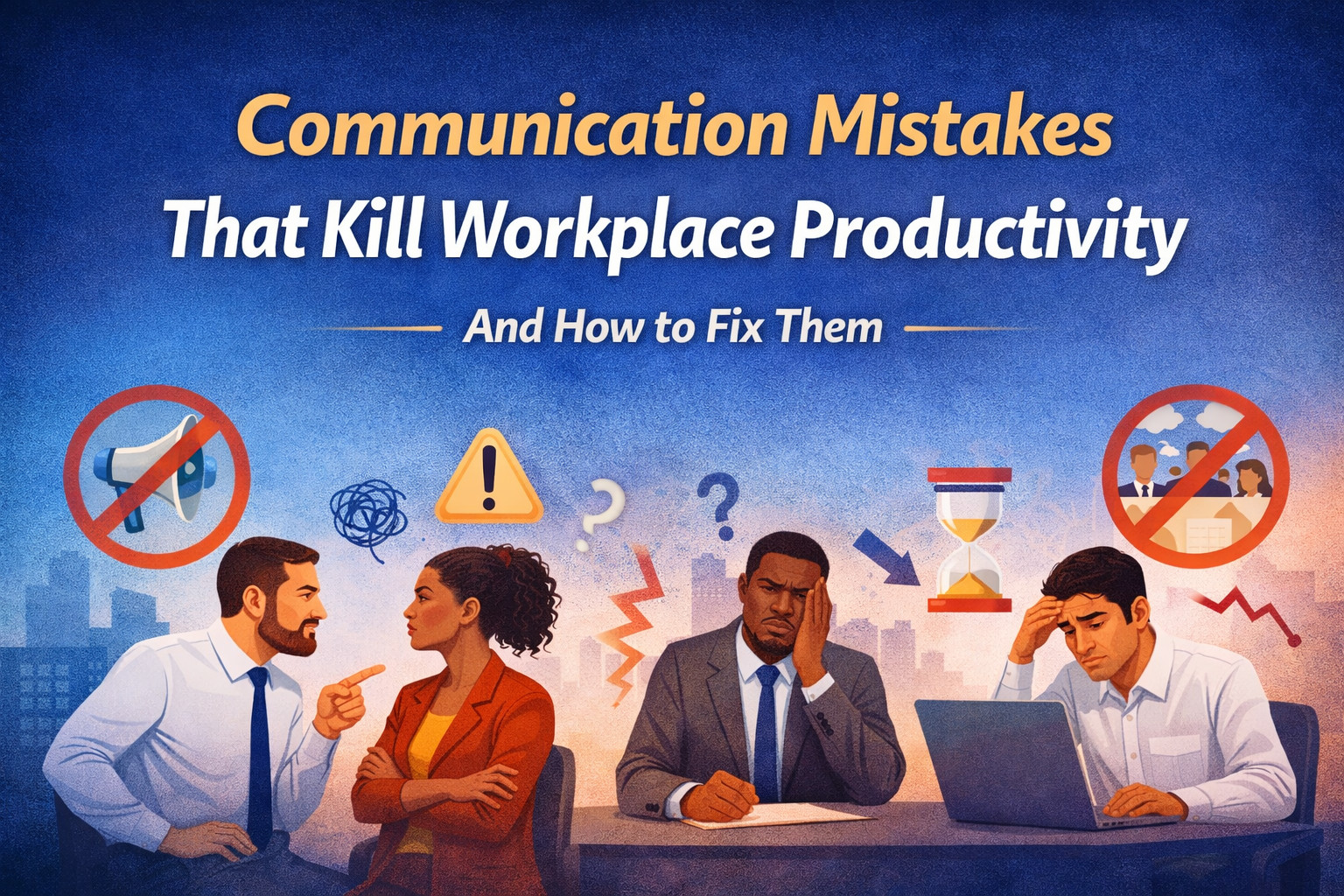
Communication is the backbone of every successful organization. Yet, despite advanced collaboration tools, structured reporting systems, and regular meetings, workplace productivity continues to suffer due to one major issue — poor communication.
In 2026, businesses operate in hybrid environments, cross-functional teams, and fast-moving markets. In such an ecosystem, even small communication gaps can lead to project delays, low employee engagement, duplication of work, and costly misunderstandings.
The reality is simple: productivity does not decline because employees lack skill. It declines because expectations are unclear, feedback is inconsistent, and conversations are ineffective.
This article explores the most common communication mistakes that kill workplace productivity and provides practical solutions leaders and managers can implement immediately.
Why Communication Directly Impacts Productivity
Before diving into mistakes, it is important to understand why communication is directly linked to performance.
Effective communication ensures:
- Clarity of expectations
- Alignment of goals
- Faster decision-making
- Reduced conflict
- Higher engagement
- Stronger collaboration
When communication breaks down, teams lose focus, morale declines, and productivity suffers. Now let’s examine the communication mistakes that silently damage workplace efficiency.
1. Lack of Clear Expectations
One of the biggest productivity killers is unclear direction. When managers fail to clearly define roles, deliverables, timelines, and success criteria, employees are left guessing.
This often results in:
- Rework and corrections
- Missed deadlines
- Confusion about priorities
- Low confidence in leadership
How to Fix It
Leaders must communicate expectations clearly and confirm understanding. This includes:
- Defining measurable outcomes
- Setting realistic deadlines
- Clarifying roles and responsibilities
- Encouraging questions for alignment
Clarity eliminates ambiguity, and clarity drives productivity.
2. Poor Listening Skills
Communication is not just about speaking; it is about listening. Many managers listen to respond, not to understand.
Poor listening leads to:
- Misinterpretation of employee concerns
- Overlooked ideas and innovation
- Decreased morale
- Repeated mistakes
How to Fix It
Practice active listening:
- Maintain eye contact (even in virtual meetings)
- Avoid interrupting
- Paraphrase for clarity
- Ask follow-up questions
When employees feel heard, engagement and accountability increase.
3. Overcommunication Without Structure
While undercommunication is harmful, overcommunication without structure is equally damaging.
Too many meetings, excessive emails, and constant notifications overwhelm employees and reduce deep work time.
How to Fix It
- Set clear meeting agendas
- Limit meeting duration
- Use written updates instead of unnecessary calls
- Define communication channels for specific purposes
Smart communication improves focus and efficiency.
4. Avoiding Difficult Conversations
Many leaders avoid difficult conversations related to performance issues, behavioral concerns, or conflicts. This avoidance creates resentment and lowers team standards.
Unaddressed issues often escalate, affecting overall productivity.
How to Fix It
Address issues early and constructively:
- Focus on behavior, not personality
- Be specific and solution-oriented
- Maintain respect and professionalism
- Provide improvement pathways
Direct conversations prevent long-term damage.
5. Inconsistent Feedback
Employees perform better when they receive regular feedback. Inconsistent or delayed feedback leads to confusion and disengagement.
Without feedback, employees do not know if they are meeting expectations.
How to Fix It
- Provide ongoing feedback, not just annual reviews
- Balance positive reinforcement with constructive input
- Recognize achievements publicly
- Offer developmental guidance privately
Feedback fuels growth and performance improvement.
6. Communication Silos Between Departments
In many organizations, departments operate independently with limited cross-functional communication. This creates duplication of efforts and strategic misalignment.
How to Fix It
- Encourage cross-department meetings
- Use collaborative project tools
- Align goals across teams
- Promote transparency in updates
Collaboration enhances efficiency and innovation.
7. Emotional Reactions Instead of Professional Responses
Leaders who react emotionally during stress damage team morale. Emotional outbursts create fear and reduce open communication.
How to Fix It
- Pause before responding
- Practice emotional intelligence
- Maintain professionalism under pressure
- Address issues calmly and constructively
Emotional control strengthens leadership credibility.
8. Lack of Transparency
When leadership withholds information unnecessarily, employees feel disconnected from organizational direction.
Lack of transparency leads to rumors and distrust.
How to Fix It
- Share relevant updates openly
- Communicate business goals clearly
- Explain the reasoning behind decisions
- Encourage open Q&A sessions
Transparency builds trust and alignment.
9. Ignoring Non-Verbal Communication
Non-verbal cues such as tone, body language, and facial expressions significantly influence communication effectiveness.
In virtual environments, tone becomes even more critical.
How to Fix It
- Be mindful of tone in emails and messages
- Maintain positive body language
- Observe team reactions during discussions
- Use video calls when clarity is essential
Non-verbal awareness enhances clarity and connection.
10. No Communication Training for Managers
Many organizations assume managers naturally possess strong communication skills. However, communication is a skill that must be developed intentionally.
Without structured training, leaders repeat ineffective patterns.
How to Fix It
- Invest in communication skills training
- Conduct leadership development programs
- Offer coaching and mentoring support
- Measure communication effectiveness through feedback surveys
Training transforms communication from reactive to strategic.
The Business Cost of Poor Communication
Communication breakdowns can result in:
- Reduced employee engagement
- Higher turnover rates
- Lower productivity
- Increased conflict
- Project delays
- Reputational damage
Improving workplace communication is not just a soft skill initiative—it is a business performance strategy.
Building a Culture of Effective Communication
Organizations must foster a culture where open dialogue, feedback, and collaboration are encouraged at every level.
This includes:
- Encouraging psychological safety
- Promoting transparency
- Training leaders in emotional intelligence
- Implementing structured communication systems
When communication improves, productivity naturally increases.
Conclusion: Communication Drives Organizational Success
Communication mistakes silently erode productivity, morale, and performance. However, with intentional effort and structured leadership development, these challenges can be corrected.
Organizations that prioritize communication skills training empower managers to lead with clarity, empathy, and strategic alignment.
Strong communication does not just improve conversations—it transforms culture and results.
Contact Us to Strengthen Workplace Communication
If your organization wants to eliminate communication gaps and improve team productivity, we can help.
Our structured communication skills training and leadership development programs are designed to enhance clarity, emotional intelligence, and cross-functional collaboration.
We partner with organizations to create customized training solutions that drive measurable impact.
Ready to transform communication across your organization?
Contact us today to explore how we can support your communication and leadership development initiatives.