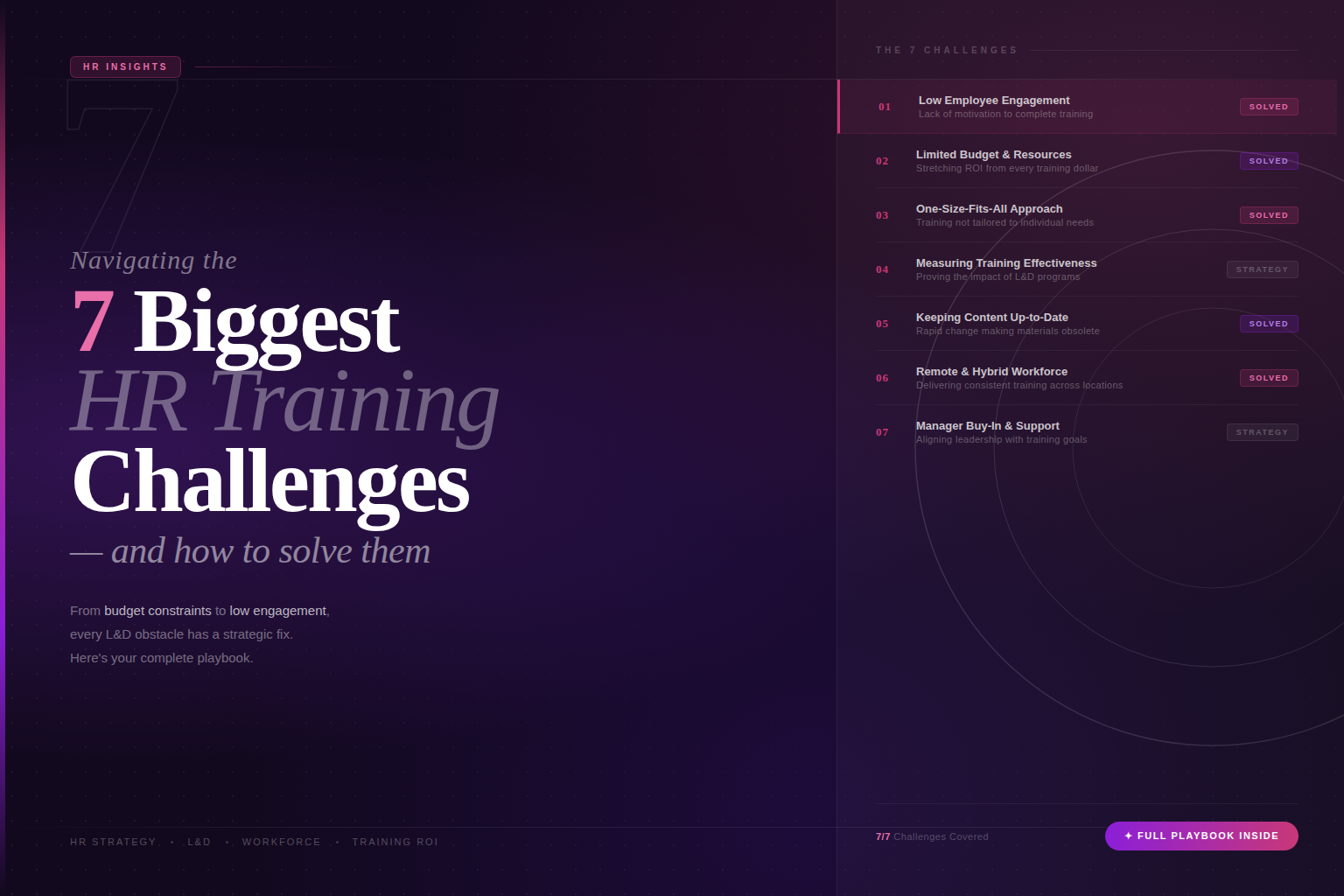
The 7 Biggest Challenges HR Leaders Face in Employee Training (And How to Solve Them)

In today’s rapidly evolving business landscape, organizations are under constant pressure to adapt to technological change, market competition, and shifting workforce expectations. One of the most critical factors determining whether companies succeed in this environment is the ability of employees to continuously develop new skills.

This responsibility largely falls on Human Resources (HR) and Learning & Development (L&D) leaders. These professionals are tasked with designing training programs that improve employee performance, strengthen leadership capabilities, and prepare organizations for future challenges.

However, implementing effective employee training initiatives is far from simple. HR leaders face multiple obstacles that make it difficult to deliver impactful learning experiences. From identifying the right skills to developing training programs that employees actually apply in their work, these challenges can significantly impact organizational productivity.

Understanding these HR training challenges is essential for companies that want to create successful employee development programs. By recognizing the barriers that exist and implementing strategies to overcome them, organizations can build learning cultures that drive long-term business success.

In this comprehensive guide, we explore the seven biggest challenges HR leaders face in employee training and discuss practical strategies to overcome them.

The Growing Importance of Employee Training in Modern Organizations

Employee training is no longer viewed as an optional activity that organizations implement occasionally. Instead, it has become a strategic necessity. Businesses operate in a world where knowledge becomes outdated quickly, technologies evolve rapidly, and new skills are required to remain competitive.

Companies that invest in employee development experience several advantages:

  • Improved employee productivity
  • Better leadership development
  • Higher employee engagement
  • Stronger workplace culture
  • Greater innovation and adaptability

However, achieving these benefits requires carefully planned training strategies. Without addressing key challenges in learning and development, organizations may struggle to see real improvements in employee performance.

Challenge 1: Identifying the Right Training Needs

One of the most fundamental challenges HR leaders face is determining which skills employees actually need to develop. Many organizations invest in training programs without conducting proper analysis of skill gaps.

This often results in generic training initiatives that fail to address real workplace problems.

Why This Happens

Several factors contribute to this challenge:

  • Lack of structured skill assessments
  • Limited communication between managers and HR teams
  • Assumptions about employee skill gaps
  • Insufficient use of performance data

Without accurate insights, HR teams may design training programs that employees find irrelevant.

How to Solve This Challenge

Organizations should implement a structured Training Needs Analysis (TNA). This process helps identify the gap between current employee capabilities and the skills required to achieve organizational goals.

Common tools used for TNA include:

  • Employee surveys
  • Manager interviews
  • Performance reviews
  • Competency assessments
  • Workplace observations

By using data-driven insights, HR leaders can design training programs that directly address skill gaps.

Challenge 2: Low Employee Engagement in Training Programs

Another major challenge HR leaders encounter is low employee engagement during training sessions. Employees often attend training programs because they are required to do so, rather than because they see genuine value in them.

When employees are disengaged, training becomes ineffective. Participants may attend sessions physically but remain mentally disconnected from the learning process.

Reasons for Low Engagement

  • Training content that feels generic
  • Traditional lecture-style training methods
  • Lack of real-world application
  • Long training sessions with minimal interaction

How to Improve Engagement

Modern corporate training programs focus on interactive learning experiences. HR leaders can increase engagement by incorporating:

  • Experiential learning activities
  • Role-playing exercises
  • Case studies based on real workplace scenarios
  • Group discussions
  • Gamified learning techniques

Training that connects directly to employees’ daily work responsibilities tends to be far more engaging and impactful.

Challenge 3: Limited Training Budgets

Budget constraints remain one of the most common HR training challenges. Many organizations understand the importance of employee development but struggle to allocate sufficient financial resources for training initiatives.

HR departments often compete with other business priorities when requesting funding for training programs.

Impact of Budget Limitations

  • Reduced access to expert trainers
  • Limited customization of training programs
  • Restricted access to learning technologies
  • Fewer development opportunities for employees

Strategies to Overcome Budget Constraints

Organizations can maximize training impact even with limited budgets by focusing on high-priority skill areas such as leadership development, communication skills, and problem-solving.

Blended learning models that combine classroom training with digital platforms can also reduce costs while maintaining effectiveness.

Challenge 4: Measuring Training Effectiveness

Many HR leaders struggle to measure whether training programs actually improve employee performance. Without clear evaluation methods, it becomes difficult to determine the return on investment (ROI) of training initiatives.

Simply collecting feedback from participants does not provide sufficient evidence of training effectiveness.

The Kirkpatrick Evaluation Model

One widely used framework for measuring training effectiveness is the Kirkpatrick Model. It evaluates training impact across four levels:

  • Reaction: How participants respond to training
  • Learning: Knowledge or skills gained
  • Behavior: Changes in workplace behavior
  • Results: Impact on organizational performance

Organizations that track these metrics can continuously improve their training programs.

Challenge 5: Rapid Technological Change

Technological advancements are transforming nearly every industry. Automation, artificial intelligence, and digital platforms are constantly changing how employees perform their roles.

HR leaders must ensure that employees develop the digital skills required to remain effective in evolving work environments.

However, designing training programs that keep pace with technological change can be challenging.

Creating a Continuous Learning Culture

Organizations should promote ongoing learning rather than relying solely on occasional training sessions.

Strategies for continuous learning include:

  • Microlearning platforms
  • Online training modules
  • Peer knowledge-sharing sessions
  • Digital learning communities

Challenge 6: Training a Diverse Workforce

Modern organizations include employees from multiple generations, cultures, and professional backgrounds. Designing training programs that appeal to such diverse groups can be challenging.

For example:

  • Older employees may prefer classroom training.
  • Younger employees may prefer digital learning tools.
  • Remote workers may require virtual learning environments.

Flexible Learning Solutions

Blended learning approaches that combine classroom sessions, digital modules, and interactive workshops can accommodate diverse learning preferences.

Challenge 7: Ensuring Long-Term Skill Application

One of the biggest problems organizations face is that employees often forget training content shortly after completing programs.

This occurs because learning is not reinforced after training sessions.

Strategies to Reinforce Learning

  • Follow-up coaching sessions
  • Practical workplace assignments
  • Manager feedback
  • Peer learning groups
  • Continuous learning resources

When training is reinforced through practice and feedback, employees are more likely to apply new skills effectively.

Building a Successful Employee Training Strategy

To overcome HR training challenges, organizations must adopt strategic approaches to employee development.

Successful training strategies typically include:

  • Data-driven training needs analysis
  • Interactive and experiential learning methods
  • Continuous learning opportunities
  • Effective training evaluation systems
  • Leadership involvement in employee development

Organizations that integrate these practices create learning cultures that support long-term growth.

Conclusion

Employee training remains one of the most powerful tools organizations can use to improve performance, build leadership capabilities, and drive innovation.

However, HR leaders face numerous challenges when designing and implementing effective training programs. From identifying skill gaps to maintaining employee engagement and measuring outcomes, these obstacles require strategic solutions.

By addressing these HR training challenges and implementing structured learning strategies, organizations can create impactful training programs that enhance employee capabilities and contribute to business success.

Book a Demo

Looking to overcome employee training challenges and design impactful learning programs for your organization?

Insite Learning Solutions specializes in customized corporate training programs that help organizations develop leadership capabilities, improve communication skills, and build high-performing teams.

Our expert trainers work closely with organizations to deliver practical learning experiences that address real workplace challenges.
Book a Demo

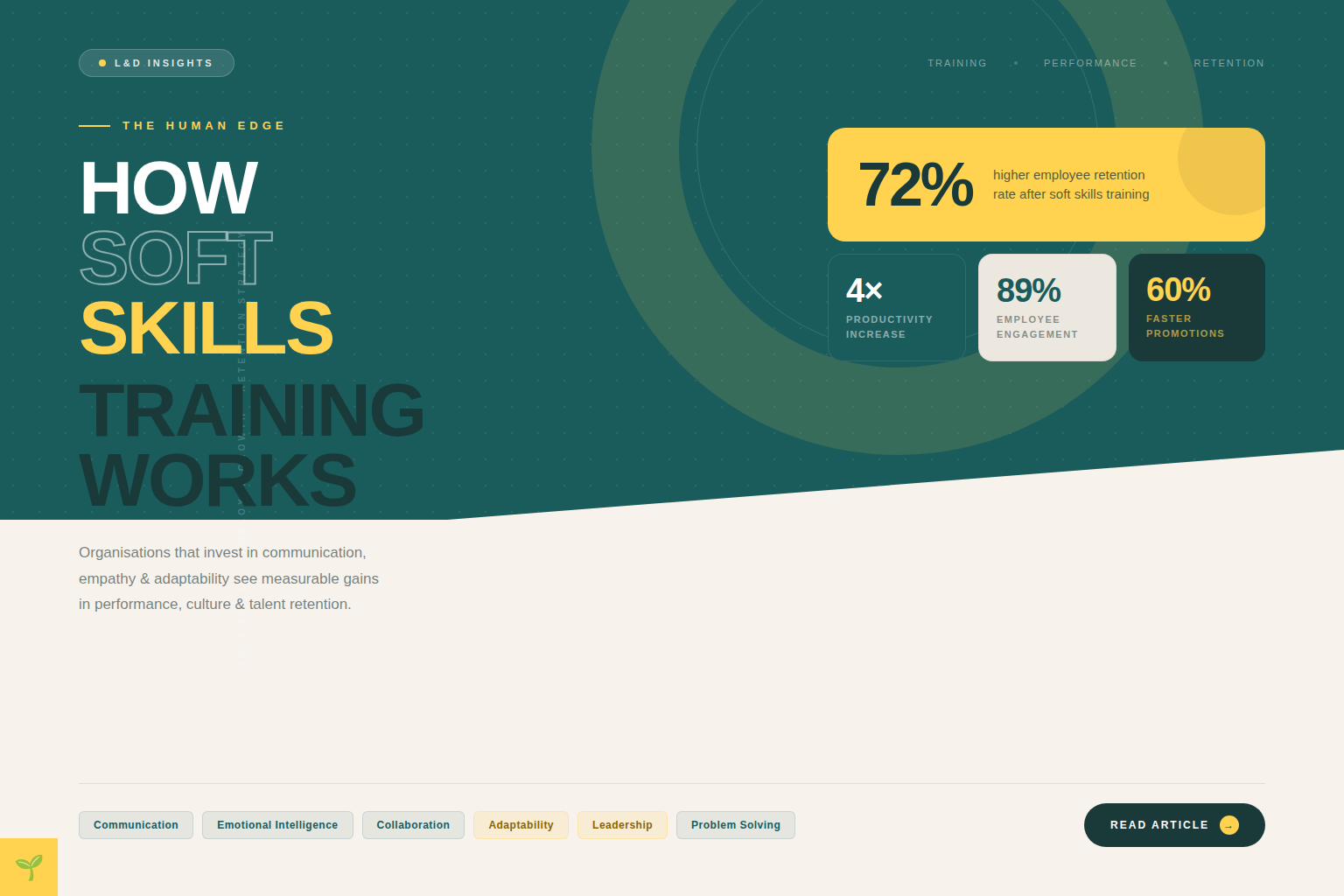
How Soft Skills Training Improves Employee Performance and Retention

In today’s modern workplace, organizations are no longer competing only through technology, infrastructure, or products. They are competing through people. While technical expertise remains essential for completing tasks, it is the human capabilities of employees that determine how effectively teams collaborate, communicate, innovate, and solve problems.

This is where soft skills play a crucial role. Soft skills include interpersonal abilities such as communication, emotional intelligence, teamwork, adaptability, and leadership. These capabilities enable employees to work effectively with others, manage workplace challenges, and contribute positively to organizational culture.

As businesses become more collaborative and customer-focused, companies across industries are realizing the importance of investing in soft skills development. Organizations that provide structured soft skills training programs often see improvements in employee productivity, workplace culture, employee engagement, and long-term retention.

This article explores the key soft skills training benefits for organizations and explains how developing these capabilities can significantly improve employee performance and retention.

Why Technical Skills Alone Are Not Enough

Technical skills are essential for performing job-specific responsibilities. Engineers must understand technical systems, accountants must understand financial processes, and software developers must understand coding languages. However, technical knowledge alone does not guarantee success in today’s collaborative workplace.

Employees rarely work in isolation. Most roles require constant communication with colleagues, clients, managers, and cross-functional teams. Without strong interpersonal abilities, even highly skilled professionals may struggle to work effectively with others.

For example, an employee may have excellent analytical skills but may struggle to present ideas clearly during meetings. Another employee may have strong technical expertise but may find it difficult to collaborate with team members or manage workplace conflicts.

In such situations, soft skills become the bridge between technical knowledge and practical workplace effectiveness.

The Modern Workplace Requires Human-Centered Skills

The nature of work has changed dramatically over the last decade. Organizations now operate in environments characterized by rapid technological change, global collaboration, and hybrid work models. Employees are expected to communicate across digital platforms, collaborate with diverse teams, and respond quickly to changing circumstances.

These workplace realities require skills such as adaptability, communication, empathy, and problem-solving. Soft skills training helps employees develop these capabilities so they can navigate modern workplace challenges effectively.

Technical Expertise + Soft Skills = High Performance

When employees combine technical expertise with strong interpersonal abilities, they become significantly more effective contributors. They can share ideas clearly, collaborate with colleagues, manage conflicts constructively, and maintain positive workplace relationships.

Organizations that invest in both technical training and soft skills development create balanced professionals who can perform tasks effectively while also strengthening team dynamics.

Top Soft Skills Companies Are Investing In

As organizations recognize the importance of interpersonal competencies, they are increasingly investing in training programs that focus on developing essential soft skills.

Some of the most important soft skills organizations prioritize include the following.

Communication Skills

Communication is one of the most fundamental workplace skills. Employees must be able to clearly convey ideas, listen actively to others, and provide constructive feedback. Poor communication can lead to misunderstandings, delays, and workplace conflicts.

Communication training typically focuses on:

  • Active listening techniques
  • Clear and structured messaging
  • Presentation skills
  • Providing and receiving feedback
  • Handling difficult conversations

Employees who communicate effectively help create transparent workplaces where information flows smoothly and collaboration becomes easier.

Emotional Intelligence

Emotional intelligence refers to the ability to understand and manage one’s own emotions while recognizing and responding appropriately to the emotions of others.

Employees with strong emotional intelligence demonstrate empathy, self-awareness, and emotional control. These qualities help them manage workplace relationships more effectively.

Organizations often include emotional intelligence training in leadership development programs because leaders who understand emotions can motivate teams, manage conflicts, and build stronger relationships.

Team Collaboration

Modern organizations rely heavily on teamwork. Employees must collaborate with colleagues from different departments, backgrounds, and skill sets.

Soft skills training helps employees develop collaboration abilities such as trust-building, constructive feedback, and collective problem-solving. These skills enable teams to work together effectively and achieve shared goals.

Problem-Solving and Critical Thinking

Workplace challenges often require creative solutions. Employees with strong problem-solving skills can analyze complex situations, evaluate different options, and develop effective strategies.

Training programs that focus on critical thinking encourage employees to approach challenges systematically and develop innovative solutions.

Adaptability and Resilience

Organizations constantly face change driven by technology, market conditions, and customer expectations. Employees who are adaptable and resilient can adjust quickly to new situations while maintaining productivity.

Adaptability training helps employees remain confident and proactive even during uncertain or rapidly changing circumstances.

Impact of Soft Skills on Workplace Productivity

One of the most measurable benefits of soft skills training is improved productivity. When employees possess strong interpersonal capabilities, they collaborate more effectively, resolve issues faster, and maintain positive workplace relationships.

Several productivity improvements occur when organizations prioritize soft skills development.

Better Team Coordination

Teams with strong communication and collaboration skills coordinate tasks more effectively. Employees understand expectations clearly, share information quickly, and support each other during projects.

Reduced Workplace Conflicts

Conflicts can disrupt productivity and create negative work environments. Employees who have developed emotional intelligence and communication skills are better equipped to resolve disagreements constructively.

Faster Problem Resolution

Employees who possess critical thinking and problem-solving skills can identify solutions quickly. This reduces delays and helps teams maintain project momentum.

Improved Customer Interactions

Many roles require employees to interact directly with customers. Communication and empathy skills help employees understand customer needs and deliver better service experiences.

When employees perform more effectively in their roles, overall organizational productivity increases.

Soft Skills and Employee Engagement

Employee engagement has become one of the most important factors influencing workplace performance. Engaged employees are more committed to their work, contribute more actively to team success, and demonstrate higher levels of motivation.

Soft skills training significantly influences employee engagement by strengthening workplace relationships and improving organizational culture.

Stronger Workplace Relationships

Employees who develop interpersonal skills build stronger relationships with colleagues and managers. These positive relationships create supportive environments where employees feel comfortable sharing ideas and seeking assistance.

Improved Leadership Effectiveness

Managers who develop leadership communication and emotional intelligence skills create teams where employees feel valued and respected. Strong leadership increases employee trust and engagement.

Encouraging Employee Participation

Soft skills training encourages open communication and collaboration. Employees feel more confident participating in discussions, offering suggestions, and contributing innovative ideas.

When employees feel heard and appreciated, they become more engaged in their work.

How Soft Skills Training Improves Employee Retention

Employee retention is a major concern for organizations across industries. High turnover rates increase recruitment costs and disrupt team productivity.

Soft skills training helps address retention challenges by improving workplace culture and supporting employee growth.

Providing Professional Development Opportunities

Employees are more likely to stay with organizations that invest in their professional development. Soft skills training signals that the organization values employee growth and long-term career development.

Creating Positive Workplace Culture

Training programs that focus on communication, empathy, and collaboration contribute to healthier workplace cultures where employees enjoy working.

Strengthening Manager-Employee Relationships

Managers who develop leadership soft skills build stronger relationships with their teams. Employees who feel supported by their managers are more likely to remain committed to their organizations.

Real Corporate Training Examples

Example 1: Communication Skills Training

A technology company conducted communication training for its project managers after internal surveys revealed misunderstandings between technical teams.

After the training program, the company observed improved collaboration and faster project completion times.

Example 2: Emotional Intelligence Workshops

A financial services organization introduced emotional intelligence workshops to help employees manage workplace stress and build stronger relationships.

Following the training program, employee engagement scores increased significantly.

Example 3: Customer Interaction Training

A customer support organization provided soft skills training focused on empathy and communication. Customer satisfaction ratings improved dramatically after employees applied these skills.

Long-Term Organizational Benefits of Soft Skills Training

Organizations that consistently invest in soft skills development often experience long-term advantages.

  • Improved employee morale
  • Higher productivity levels
  • Better collaboration between teams
  • Stronger leadership pipelines
  • Enhanced customer experiences

These benefits contribute to sustainable organizational growth.

Conclusion

Soft skills have become essential for success in today’s modern workplace. While technical skills enable employees to perform tasks, soft skills determine how effectively they collaborate, communicate, and contribute to organizational goals.

Organizations that invest in soft skills training create workplaces where employees thrive, teams collaborate effectively, and leaders inspire innovation.

As businesses continue to evolve, developing interpersonal capabilities will remain a critical factor in building resilient and high-performing organizations.

Book a Demo

Looking to improve employee performance and build stronger teams through soft skills training?

Insite Learning Solutions offers customized corporate training programs designed to develop communication skills, leadership capabilities, and emotional intelligence within organizations.

Our expert trainers deliver practical and engaging learning experiences that help employees apply soft skills effectively in real workplace situations.


Book a Demo

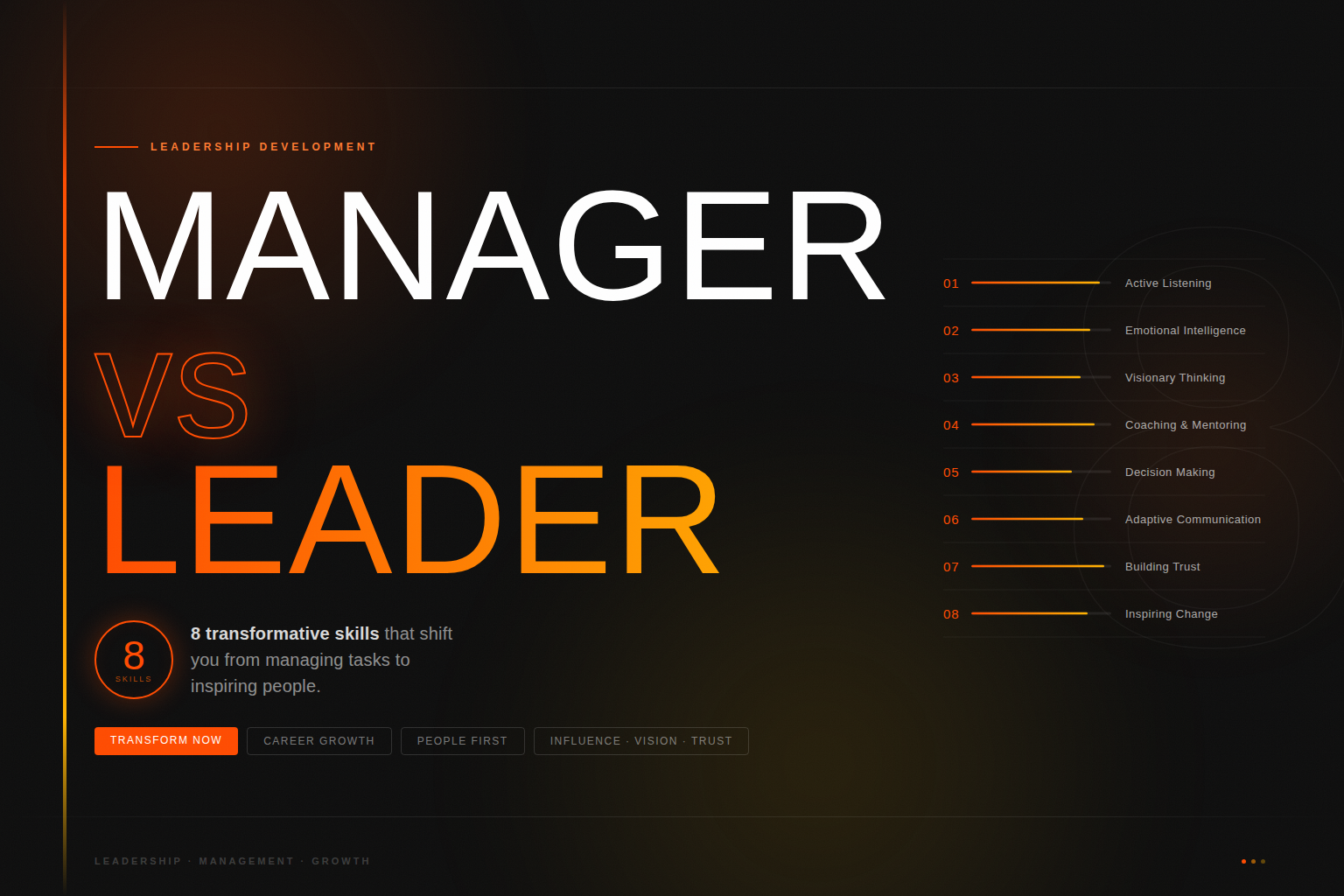
Manager vs Leader: 8 Leadership Skills That Transform Managers into Great Leaders

In today’s competitive and fast-changing business environment, organizations are realizing that management alone is not enough to build high-performing teams. Companies need leaders who can inspire employees, guide teams through uncertainty, and create a culture of collaboration and innovation.

Many professionals are promoted into managerial roles because of their technical expertise or operational excellence. However, managing tasks and leading people are two very different capabilities. While managers focus on processes, efficiency, and execution, leaders focus on vision, influence, and people development.

This distinction is why developing leadership skills for managers has become a top priority for organizations around the world. Managers who develop leadership capabilities are better equipped to motivate teams, handle complex workplace challenges, and drive sustainable organizational growth.

In this comprehensive guide, we will explore the difference between managing and leading, discuss the most important leadership skills managers must develop, and explain how organizations can help managers evolve into impactful leaders.

Difference Between Managing and Leading

The terms “manager” and “leader” are often used interchangeably, but they represent distinct approaches to guiding teams and achieving results.

What Does a Manager Do?

A manager is responsible for planning, organizing, and supervising work activities to ensure tasks are completed efficiently. Managers focus on maintaining operational stability, ensuring employees follow procedures, and meeting performance targets.

Typical responsibilities of managers include:

  • Assigning tasks and responsibilities
  • Monitoring employee performance
  • Managing schedules and resources
  • Ensuring processes are followed correctly
  • Maintaining operational efficiency

Management is essential for maintaining structure and ensuring that daily operations run smoothly.

What Does a Leader Do?

Leadership, on the other hand, focuses on inspiring people, setting direction, and encouraging innovation. Leaders influence others to work toward a shared vision and empower teams to perform at their best.

Effective leaders typically:

  • Create a compelling vision for the future
  • Motivate and inspire employees
  • Encourage innovation and creativity
  • Develop and mentor team members
  • Build trust and strong relationships

While managers focus on controlling processes, leaders focus on empowering people. The most successful professionals combine both management and leadership capabilities.

Why Leadership Skills for Managers Are Critical Today

The workplace has changed dramatically over the past decade. Organizations are dealing with digital transformation, global competition, remote work environments, and constantly evolving employee expectations.

In such a dynamic environment, simply managing tasks is not enough. Managers must develop leadership capabilities that help them guide teams through change, motivate employees, and create high-performance cultures.

Organizations that prioritize leadership development often experience several benefits:

  • Higher employee engagement and satisfaction
  • Stronger collaboration between teams
  • Improved decision-making across departments
  • Better adaptability during change and uncertainty
  • Greater innovation and problem-solving capabilities

When managers develop leadership skills, they become catalysts for organizational growth.

8 Leadership Skills That Transform Managers into Leaders

To become effective leaders, managers must develop a range of interpersonal, strategic, and emotional competencies. Below are eight essential leadership skills that help managers transition into impactful leaders.

1. Communication Skills

Communication is the foundation of effective leadership. Leaders must clearly articulate goals, expectations, and organizational vision while also listening actively to their teams.

Strong communication skills allow leaders to:

  • Provide clear instructions and direction
  • Share organizational vision with employees
  • Encourage open dialogue within teams
  • Resolve conflicts effectively
  • Build trust through transparency

Managers who communicate effectively create an environment where employees feel informed, valued, and motivated.

2. Vision and Strategic Thinking

Managers typically focus on short-term goals and daily operations. Leaders, however, must think strategically and plan for the long-term success of the organization.

Strategic thinking helps leaders anticipate challenges, identify opportunities, and guide teams toward future growth.

Leaders with strong strategic thinking capabilities can:

  • Align team goals with organizational objectives
  • Anticipate market trends and industry changes
  • Make proactive decisions
  • Guide teams through complex challenges

Strategic leaders help organizations remain competitive in rapidly evolving industries.

3. Emotional Intelligence

Emotional intelligence is the ability to understand and manage one’s own emotions while recognizing and influencing the emotions of others.

Leaders with high emotional intelligence build stronger relationships, manage conflicts effectively, and create supportive workplace environments.

Key elements of emotional intelligence include:

  • Self-awareness
  • Self-regulation
  • Empathy
  • Social awareness
  • Relationship management

Emotional intelligence enables leaders to connect with employees on a deeper level, which improves collaboration and engagement.

4. Coaching and Mentoring

Great leaders focus on developing their team members rather than simply directing them. Coaching involves guiding employees to discover solutions, build confidence, and improve performance.

Managers who adopt a coaching mindset can:

  • Empower employees to take ownership of their work
  • Encourage continuous learning
  • Help employees develop new skills
  • Build stronger professional relationships

Organizations that promote coaching leadership styles often experience higher levels of employee engagement and retention.

5. Decision-Making Skills

Leaders are frequently required to make complex decisions that impact teams, projects, and business outcomes. Effective decision-making involves evaluating data, considering multiple perspectives, and choosing the best course of action.

Strong decision-making skills allow leaders to:

  • Handle uncertainty with confidence
  • Address challenges quickly
  • Minimize risks
  • Guide teams toward effective solutions

Leaders who make thoughtful and timely decisions build credibility and trust within their teams.

6. Adaptability and Change Management

Modern organizations operate in environments of constant change. Leaders must be adaptable and capable of guiding teams through uncertainty.

Adaptable leaders:

  • Embrace new technologies and ideas
  • Encourage flexible thinking
  • Support employees during change
  • Maintain productivity during transitions

Organizations need leaders who can remain calm and focused even during periods of disruption.

7. Accountability and Ownership

Effective leaders take responsibility for both successes and failures. They create cultures where employees understand their responsibilities and take ownership of their work.

Leaders who demonstrate accountability inspire trust and encourage teams to perform at higher levels.

8. Building Trust and Collaboration

Trust is the foundation of strong leadership. Employees perform better when they trust their leaders and feel supported in their work.

Leaders build trust by:

  • Demonstrating integrity and honesty
  • Communicating openly with teams
  • Recognizing employee contributions
  • Supporting employees during challenges

Trust-based leadership creates positive workplace cultures where teams collaborate effectively.

Coaching vs Controlling Teams

One of the most important shifts managers must make when becoming leaders is moving from a controlling approach to a coaching approach.

Controlling Approach

Managers who rely heavily on control often focus on monitoring every detail of employee work. They provide strict instructions and expect employees to follow predefined processes.

While this approach may ensure short-term efficiency, it can reduce employee motivation and limit creativity.

Coaching Approach

Leaders adopt a coaching mindset that focuses on empowering employees rather than controlling them.

Coaching leaders:

  • Encourage independent thinking
  • Help employees develop problem-solving skills
  • Provide guidance rather than commands
  • Create environments where employees feel confident sharing ideas

Coaching leadership styles encourage innovation, collaboration, and continuous learning.

Strategic Thinking and Decision Making

Strategic thinking enables leaders to connect daily operations with long-term business objectives. Leaders who think strategically can evaluate opportunities, anticipate risks, and guide teams toward sustainable growth.

Strategic leaders focus on:

  • Understanding market trends
  • Analyzing business data
  • Identifying new opportunities
  • Aligning team efforts with organizational strategy

Decision-making is closely tied to strategic thinking. Leaders must evaluate information, consider multiple viewpoints, and choose the best path forward.

Organizations benefit greatly from leaders who can combine analytical thinking with sound judgment.

Emotional Intelligence in Leadership

Emotional intelligence is one of the most critical leadership competencies in the modern workplace. Leaders who understand emotions can build stronger relationships and manage workplace dynamics more effectively.

Emotionally intelligent leaders demonstrate empathy, patience, and awareness of how their behavior affects others.

They also:

  • Recognize employee challenges and concerns
  • Handle workplace conflicts constructively
  • Create supportive work environments
  • Encourage collaboration and respect

Organizations increasingly incorporate emotional intelligence training into leadership development programs.

Conclusion

The transition from manager to leader requires a shift in mindset, skills, and leadership approach. While management focuses on efficiency and task execution, leadership focuses on inspiring people, building trust, and driving long-term success.

Managers who develop leadership skills such as communication, emotional intelligence, strategic thinking, coaching, and decision-making can transform teams and organizations.

Companies that invest in leadership development programs not only build stronger leaders but also create cultures where employees feel motivated, engaged, and committed to organizational success.

Book a Demo

Looking to develop leadership capabilities within your organization?

Insite Learning Solutions offers customized leadership development programs designed to help managers build essential leadership skills, improve communication, and create high-performing teams.

Our expert trainers deliver practical, results-driven training programs tailored to the needs of your organization.


Book a Demo

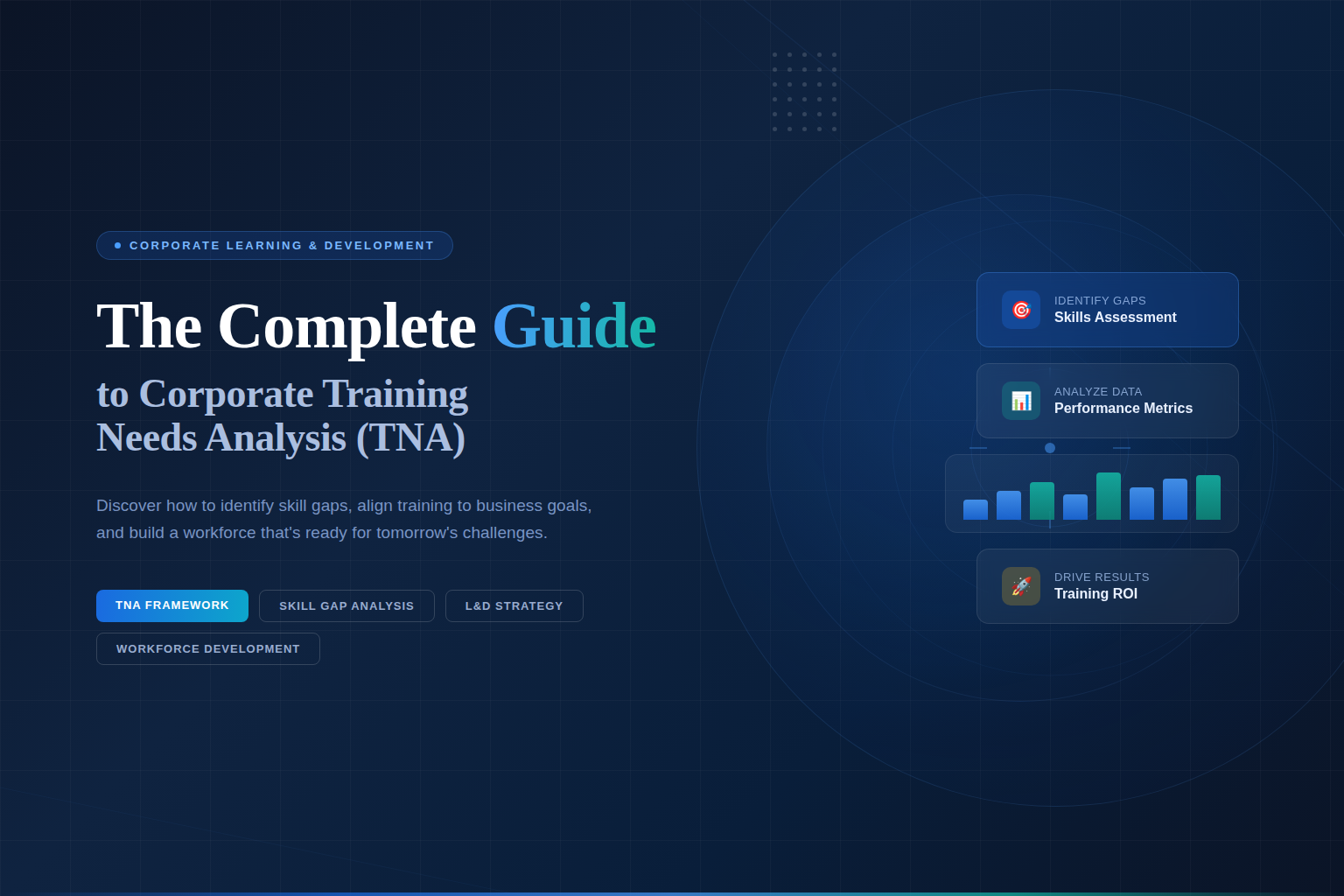
The Complete Guide to Corporate Training Needs Analysis (TNA)

In today’s rapidly evolving business environment, organizations constantly face new challenges related to workforce skills, technology changes, leadership development, and employee productivity. Companies invest significant resources in corporate training programs to improve employee performance, develop future leaders, and maintain competitive advantage. However, many training initiatives fail to deliver measurable results because they are not aligned with the actual needs of the organization.

This is where Training Needs Analysis (TNA) becomes a critical step in the learning and development process. Training Needs Analysis helps organizations identify skill gaps, determine the right training interventions, and ensure that learning initiatives align with business objectives.

When companies skip this important step, they often implement generic training programs that fail to address real challenges employees face in their daily work. As a result, training budgets are wasted, employee engagement decreases, and organizations struggle to see a return on investment.

In this comprehensive guide, we will explore everything organizations need to know about Training Needs Analysis. We will discuss what TNA is, why it is essential for successful corporate training programs, the steps involved in conducting an effective needs assessment, and the tools organizations can use to identify learning gaps.

What is Training Needs Analysis (TNA)?

Training Needs Analysis (TNA) is a systematic process used by organizations to identify the gap between the current skills and competencies of employees and the skills required to achieve organizational goals. It helps determine what training is necessary, who needs the training, and how the training should be delivered.

The main objective of TNA is to ensure that training programs are not implemented randomly but are strategically aligned with business priorities and employee development needs.

A well-executed Training Needs Analysis helps organizations answer several critical questions:

  • What skills and competencies are required to achieve business goals?
  • What skills do employees currently possess?
  • Where are the gaps between current performance and expected performance?
  • Which employees or teams require training?
  • What type of training intervention will address the identified skill gaps?

By identifying these factors, organizations can design targeted learning interventions that improve performance and contribute directly to business success.

Why Training Needs Analysis is Important for Corporate Training

Corporate training programs are designed to improve employee skills, enhance productivity, and develop leadership capabilities. However, training programs that are not based on actual needs often fail to deliver meaningful results.

Training Needs Analysis ensures that learning initiatives are relevant, strategic, and impactful.

1. Aligns Training with Business Objectives

One of the biggest advantages of Training Needs Analysis is that it connects learning initiatives with business goals. When training programs support organizational objectives such as improving customer experience, increasing sales performance, or developing leadership capabilities, they deliver measurable value.

2. Identifies Skill Gaps

TNA helps organizations identify gaps between the current capabilities of employees and the skills required to perform effectively. These insights allow organizations to focus their training efforts on areas that require improvement.

3. Improves Employee Performance

By addressing specific skill gaps, training programs become more practical and relevant. Employees gain the skills they need to perform their roles more effectively, leading to improved productivity and performance.

4. Optimizes Training Budgets

Organizations often spend large budgets on training programs that do not deliver results. Training Needs Analysis ensures that investments are directed toward the most impactful learning initiatives.

5. Increases Employee Engagement

Employees are more likely to engage in training programs that address real workplace challenges. When training programs are relevant and practical, employees see them as valuable opportunities for professional growth.

Common Reasons Why Corporate Training Fails Without TNA

Many organizations implement training programs without conducting a proper needs assessment. As a result, the training fails to address actual performance challenges.

Some common reasons why training initiatives fail include:

  • Training programs are not aligned with organizational goals.
  • Employees receive training that is not relevant to their roles.
  • Training content is too generic.
  • There is no clear measurement of training effectiveness.
  • Managers are not involved in the training process.

Training Needs Analysis helps prevent these issues by ensuring that training initiatives are carefully planned and aligned with organizational priorities.

The 5 Step Process to Conduct Training Needs Analysis

Conducting an effective Training Needs Analysis requires a structured approach. Organizations typically follow a five-step process to identify training requirements.

Step 1: Identify Organizational Goals

The first step in Training Needs Analysis is understanding the strategic objectives of the organization. Training programs should support these goals and contribute to business success.

Examples of organizational goals may include:

  • Improving customer satisfaction
  • Increasing sales performance
  • Developing leadership capabilities
  • Enhancing communication and collaboration
  • Strengthening employee engagement

By aligning training initiatives with these goals, organizations ensure that learning programs contribute to measurable business outcomes.

Step 2: Analyze Job Roles and Competencies

The next step is to analyze the skills and competencies required for different job roles within the organization. Each role requires specific knowledge, technical abilities, and behavioral competencies.

This analysis typically includes reviewing:

  • Job descriptions
  • Performance expectations
  • Key responsibilities
  • Required technical and behavioral skills

Understanding these requirements helps organizations define the skills employees must possess to perform their roles effectively.

Step 3: Assess Current Employee Skills

Once the required competencies are identified, organizations need to assess the current capabilities of employees. This helps determine where skill gaps exist.

Common methods used for skill assessment include:

  • Employee surveys
  • Performance reviews
  • Manager feedback
  • Self-assessments
  • Skill testing

These evaluation methods provide insights into employee strengths and areas that require improvement.

Step 4: Identify Skill Gaps

The comparison between required skills and current employee capabilities reveals the skill gaps that need to be addressed through training.

For example:

  • Managers may need leadership development training.
  • Employees may require communication skills training.
  • Sales teams may need negotiation and persuasion training.
  • Teams may need conflict resolution or emotional intelligence training.

Identifying these gaps ensures that training programs are targeted and effective.

Step 5: Design and Implement Training Programs

After identifying training needs, organizations can design learning programs that address the specific skill gaps.

Training interventions may include:

  • Instructor-led training workshops
  • Leadership development programs
  • Communication skills training
  • Emotional intelligence training
  • Coaching and mentoring sessions
  • Online learning modules

The key objective is to create training programs that are practical, engaging, and aligned with workplace challenges.

Tools Used for Training Needs Analysis

Organizations use various tools and techniques to conduct Training Needs Analysis effectively.

Employee Surveys

Surveys help collect insights directly from employees about the challenges they face and the skills they want to develop.

Performance Data Analysis

Analyzing productivity data, sales performance, and customer feedback can reveal areas where employees need training.

Manager Interviews

Managers provide valuable insights into team performance and skill gaps.

Focus Group Discussions

Group discussions allow employees to share experiences and identify common challenges.

Skill Assessment Tests

Structured assessments help evaluate specific competencies such as communication, leadership, and problem-solving.

Real Example of Training Needs Analysis in Leadership Development

Consider an organization experiencing declining team productivity and employee engagement. Management suspects that leadership capabilities among mid-level managers may be contributing to these challenges.

The organization conducts a Training Needs Analysis using employee surveys, manager interviews, and performance data analysis. The results reveal three major skill gaps among managers:

  • Communication and feedback skills
  • Conflict resolution capabilities
  • Emotional intelligence in leadership

Based on these insights, the organization implements a targeted leadership development program focusing on these competencies.

Within six months of the training intervention, the company observes:

  • Improved team collaboration
  • Higher employee engagement
  • Better conflict resolution
  • Increased productivity

This example demonstrates how Training Needs Analysis ensures that learning programs address real organizational challenges.

Measuring the Effectiveness of Training Programs

After implementing training programs based on TNA, organizations must measure their effectiveness to determine whether the training achieved its objectives.

The most widely used model for evaluating training effectiveness is the Kirkpatrick Model.

Kirkpatrick Model

  • Reaction: Participant feedback about the training program.
  • Learning: Knowledge or skills acquired during training.
  • Behavior: Changes in workplace behavior after training.
  • Results: Impact on business outcomes.

Measuring training effectiveness ensures continuous improvement in learning initiatives.

Best Practices for Effective Training Needs Analysis

Organizations can maximize the effectiveness of Training Needs Analysis by following these best practices:

  • Align training initiatives with strategic business goals.
  • Involve leadership and managers in the assessment process.
  • Use multiple data sources to identify skill gaps.
  • Focus on practical workplace challenges.
  • Continuously review and update training strategies.

A strategic approach to Training Needs Analysis ensures that training programs remain relevant and impactful.

Conclusion

Training Needs Analysis is a critical step in designing effective corporate training programs. By identifying skill gaps, aligning training initiatives with business objectives, and implementing targeted learning interventions, organizations can significantly improve employee performance and business outcomes.

Organizations that prioritize structured learning and development strategies are better positioned to build high-performing teams, develop strong leaders, and achieve sustainable growth.

In today’s competitive business environment, companies that invest in the right training initiatives gain a significant advantage by developing skilled, confident, and motivated employees.


Book a Demo

Looking to identify the right training needs for your team and design impactful learning programs?

Insite Learning Solutions specializes in customized corporate training programs that help organizations develop leadership capabilities, improve workplace communication, and build high-performing teams.

Our expert trainers work closely with organizations to conduct Training Needs Analysis and design tailored training solutions that deliver measurable results.

Book a Demo