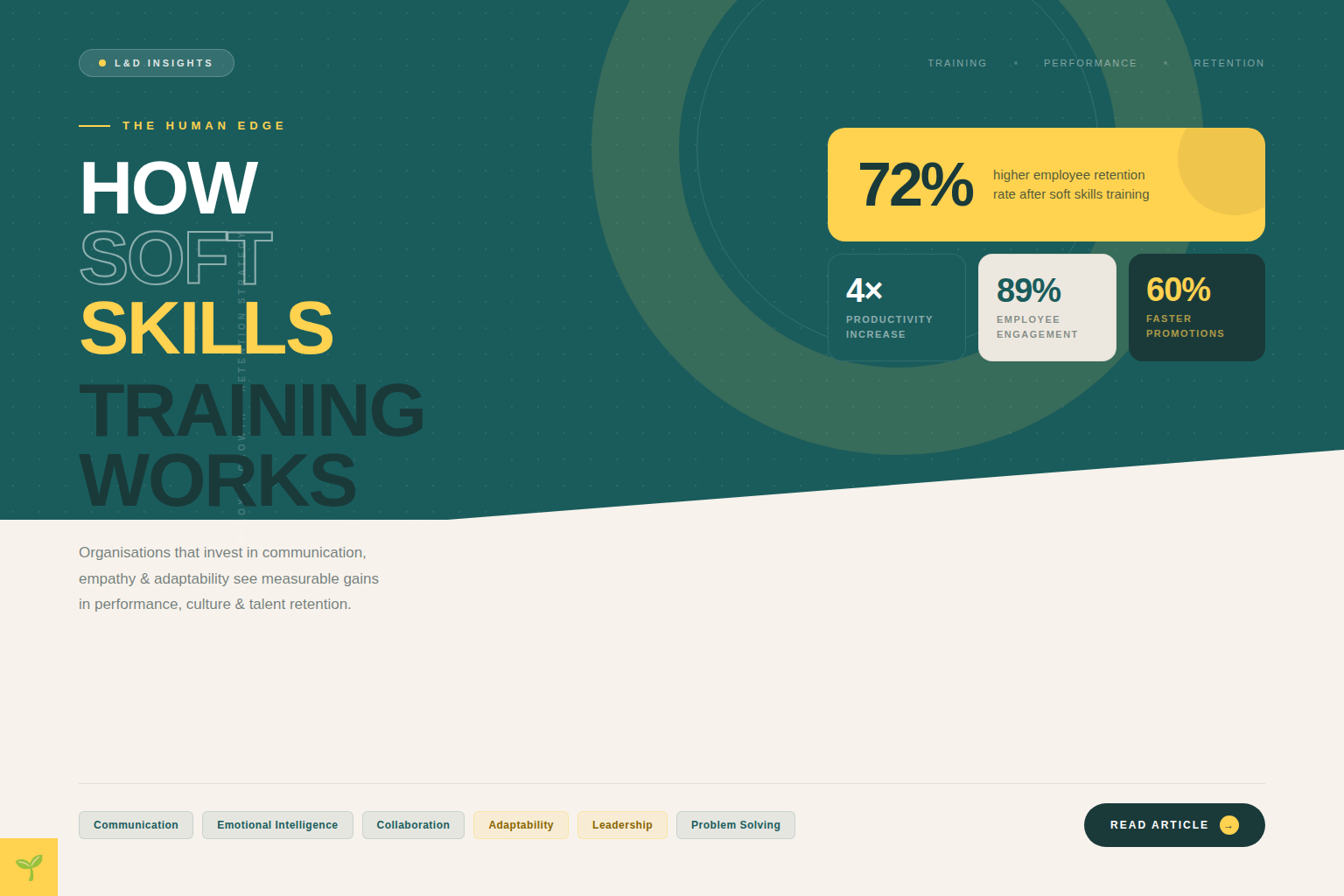
How Soft Skills Training Improves Employee Performance and Retention
In today’s modern workplace, organizations are no longer competing only through technology, infrastructure, or products. They are competing through people. While technical expertise remains essential for completing tasks, it is the human capabilities of employees that determine how effectively teams collaborate, communicate, innovate, and solve problems.
This is where soft skills play a crucial role. Soft skills include interpersonal abilities such as communication, emotional intelligence, teamwork, adaptability, and leadership. These capabilities enable employees to work effectively with others, manage workplace challenges, and contribute positively to organizational culture.
As businesses become more collaborative and customer-focused, companies across industries are realizing the importance of investing in soft skills development. Organizations that provide structured soft skills training programs often see improvements in employee productivity, workplace culture, employee engagement, and long-term retention.
This article explores the key soft skills training benefits for organizations and explains how developing these capabilities can significantly improve employee performance and retention.
Why Technical Skills Alone Are Not Enough
Technical skills are essential for performing job-specific responsibilities. Engineers must understand technical systems, accountants must understand financial processes, and software developers must understand coding languages. However, technical knowledge alone does not guarantee success in today’s collaborative workplace.
Employees rarely work in isolation. Most roles require constant communication with colleagues, clients, managers, and cross-functional teams. Without strong interpersonal abilities, even highly skilled professionals may struggle to work effectively with others.
For example, an employee may have excellent analytical skills but may struggle to present ideas clearly during meetings. Another employee may have strong technical expertise but may find it difficult to collaborate with team members or manage workplace conflicts.
In such situations, soft skills become the bridge between technical knowledge and practical workplace effectiveness.
The Modern Workplace Requires Human-Centered Skills
The nature of work has changed dramatically over the last decade. Organizations now operate in environments characterized by rapid technological change, global collaboration, and hybrid work models. Employees are expected to communicate across digital platforms, collaborate with diverse teams, and respond quickly to changing circumstances.
These workplace realities require skills such as adaptability, communication, empathy, and problem-solving. Soft skills training helps employees develop these capabilities so they can navigate modern workplace challenges effectively.
Technical Expertise + Soft Skills = High Performance
When employees combine technical expertise with strong interpersonal abilities, they become significantly more effective contributors. They can share ideas clearly, collaborate with colleagues, manage conflicts constructively, and maintain positive workplace relationships.
Organizations that invest in both technical training and soft skills development create balanced professionals who can perform tasks effectively while also strengthening team dynamics.
Top Soft Skills Companies Are Investing In
As organizations recognize the importance of interpersonal competencies, they are increasingly investing in training programs that focus on developing essential soft skills.
Some of the most important soft skills organizations prioritize include the following.
Communication Skills
Communication is one of the most fundamental workplace skills. Employees must be able to clearly convey ideas, listen actively to others, and provide constructive feedback. Poor communication can lead to misunderstandings, delays, and workplace conflicts.
Communication training typically focuses on:
- Active listening techniques
- Clear and structured messaging
- Presentation skills
- Providing and receiving feedback
- Handling difficult conversations
Employees who communicate effectively help create transparent workplaces where information flows smoothly and collaboration becomes easier.
Emotional Intelligence
Emotional intelligence refers to the ability to understand and manage one's own emotions while recognizing and responding appropriately to the emotions of others.
Employees with strong emotional intelligence demonstrate empathy, self-awareness, and emotional control. These qualities help them manage workplace relationships more effectively.
Organizations often include emotional intelligence training in leadership development programs because leaders who understand emotions can motivate teams, manage conflicts, and build stronger relationships.
Team Collaboration
Modern organizations rely heavily on teamwork. Employees must collaborate with colleagues from different departments, backgrounds, and skill sets.
Soft skills training helps employees develop collaboration abilities such as trust-building, constructive feedback, and collective problem-solving. These skills enable teams to work together effectively and achieve shared goals.
Problem-Solving and Critical Thinking
Workplace challenges often require creative solutions. Employees with strong problem-solving skills can analyze complex situations, evaluate different options, and develop effective strategies.
Training programs that focus on critical thinking encourage employees to approach challenges systematically and develop innovative solutions.
Adaptability and Resilience
Organizations constantly face change driven by technology, market conditions, and customer expectations. Employees who are adaptable and resilient can adjust quickly to new situations while maintaining productivity.
Adaptability training helps employees remain confident and proactive even during uncertain or rapidly changing circumstances.
Impact of Soft Skills on Workplace Productivity
One of the most measurable benefits of soft skills training is improved productivity. When employees possess strong interpersonal capabilities, they collaborate more effectively, resolve issues faster, and maintain positive workplace relationships.
Several productivity improvements occur when organizations prioritize soft skills development.
Better Team Coordination
Teams with strong communication and collaboration skills coordinate tasks more effectively. Employees understand expectations clearly, share information quickly, and support each other during projects.
Reduced Workplace Conflicts
Conflicts can disrupt productivity and create negative work environments. Employees who have developed emotional intelligence and communication skills are better equipped to resolve disagreements constructively.
Faster Problem Resolution
Employees who possess critical thinking and problem-solving skills can identify solutions quickly. This reduces delays and helps teams maintain project momentum.
Improved Customer Interactions
Many roles require employees to interact directly with customers. Communication and empathy skills help employees understand customer needs and deliver better service experiences.
When employees perform more effectively in their roles, overall organizational productivity increases.
Soft Skills and Employee Engagement
Employee engagement has become one of the most important factors influencing workplace performance. Engaged employees are more committed to their work, contribute more actively to team success, and demonstrate higher levels of motivation.
Soft skills training significantly influences employee engagement by strengthening workplace relationships and improving organizational culture.
Stronger Workplace Relationships
Employees who develop interpersonal skills build stronger relationships with colleagues and managers. These positive relationships create supportive environments where employees feel comfortable sharing ideas and seeking assistance.
Improved Leadership Effectiveness
Managers who develop leadership communication and emotional intelligence skills create teams where employees feel valued and respected. Strong leadership increases employee trust and engagement.
Encouraging Employee Participation
Soft skills training encourages open communication and collaboration. Employees feel more confident participating in discussions, offering suggestions, and contributing innovative ideas.
When employees feel heard and appreciated, they become more engaged in their work.
How Soft Skills Training Improves Employee Retention
Employee retention is a major concern for organizations across industries. High turnover rates increase recruitment costs and disrupt team productivity.
Soft skills training helps address retention challenges by improving workplace culture and supporting employee growth.
Providing Professional Development Opportunities
Employees are more likely to stay with organizations that invest in their professional development. Soft skills training signals that the organization values employee growth and long-term career development.
Creating Positive Workplace Culture
Training programs that focus on communication, empathy, and collaboration contribute to healthier workplace cultures where employees enjoy working.
Strengthening Manager-Employee Relationships
Managers who develop leadership soft skills build stronger relationships with their teams. Employees who feel supported by their managers are more likely to remain committed to their organizations.
Real Corporate Training Examples
Example 1: Communication Skills Training
A technology company conducted communication training for its project managers after internal surveys revealed misunderstandings between technical teams.
After the training program, the company observed improved collaboration and faster project completion times.
Example 2: Emotional Intelligence Workshops
A financial services organization introduced emotional intelligence workshops to help employees manage workplace stress and build stronger relationships.
Following the training program, employee engagement scores increased significantly.
Example 3: Customer Interaction Training
A customer support organization provided soft skills training focused on empathy and communication. Customer satisfaction ratings improved dramatically after employees applied these skills.
Long-Term Organizational Benefits of Soft Skills Training
Organizations that consistently invest in soft skills development often experience long-term advantages.
- Improved employee morale
- Higher productivity levels
- Better collaboration between teams
- Stronger leadership pipelines
- Enhanced customer experiences
These benefits contribute to sustainable organizational growth.
Conclusion
Soft skills have become essential for success in today’s modern workplace. While technical skills enable employees to perform tasks, soft skills determine how effectively they collaborate, communicate, and contribute to organizational goals.
Organizations that invest in soft skills training create workplaces where employees thrive, teams collaborate effectively, and leaders inspire innovation.
As businesses continue to evolve, developing interpersonal capabilities will remain a critical factor in building resilient and high-performing organizations.
Book a Demo
Looking to improve employee performance and build stronger teams through soft skills training?
Insite Learning Solutions offers customized corporate training programs designed to develop communication skills, leadership capabilities, and emotional intelligence within organizations.
Our expert trainers deliver practical and engaging learning experiences that help employees apply soft skills effectively in real workplace situations.