Anand Narayan |
🔗 LinkedIn Profile |
Published: June 15, 2026
Every organization wants employees who are motivated, productive, innovative, and committed to achieving business goals. Yet many companies struggle with declining engagement levels despite offering competitive salaries, modern workplaces, and attractive benefits.
The reason is simple—employee engagement goes far beyond compensation. People want meaningful work, recognition, opportunities to grow, supportive managers, and a workplace where they feel connected to their colleagues and the organization’s purpose.
According to numerous workplace studies, highly engaged employees are more productive, provide better customer experiences, remain with organizations longer, and contribute more innovative ideas than disengaged employees. Conversely, low engagement often leads to absenteeism, poor collaboration, higher turnover, and reduced business performance.
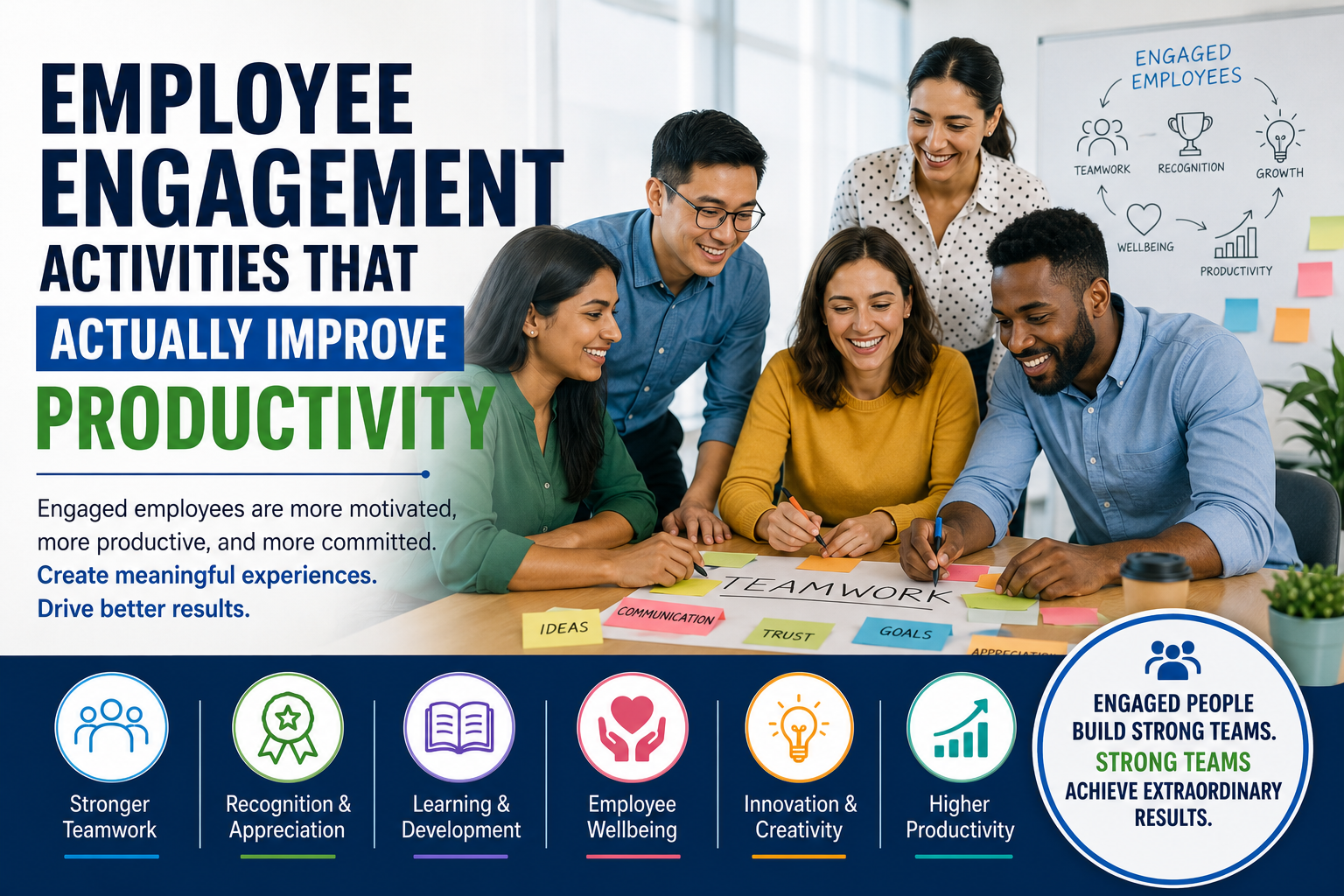
One of the most effective ways to improve engagement is by creating meaningful employee engagement activities that encourage collaboration, continuous learning, recognition, communication, and team bonding.
However, not every engagement activity delivers measurable business value.
Organizations sometimes organize fun events that employees enjoy temporarily, but those activities rarely improve productivity or strengthen workplace culture over the long term.
The most successful employee engagement initiatives align with organizational goals while helping employees develop professionally, strengthen relationships, improve communication, and feel valued.
Whether you’re an HR professional, Learning & Development leader, business owner, or department manager, choosing the right engagement activities can significantly improve employee satisfaction while driving measurable business outcomes.
In this comprehensive guide, we’ll explore employee engagement, why it matters, and the most effective engagement activities that genuinely improve productivity rather than simply entertaining employees.
What Is Employee Engagement?
Employee engagement refers to the emotional commitment employees have toward their organization, their work, their colleagues, and the organization’s mission.
Engaged employees don’t simply complete assigned tasks. They actively contribute ideas, solve problems, collaborate with others, support organizational goals, and continuously look for ways to improve performance.
Employee engagement differs significantly from employee satisfaction.
An employee may be satisfied with salary and workplace benefits while remaining disconnected from their work.
Engaged employees, on the other hand, demonstrate enthusiasm, accountability, and a genuine desire to contribute to organizational success.
Organizations with high engagement typically experience:
- Higher productivity
- Better teamwork
- Improved innovation
- Lower absenteeism
- Reduced employee turnover
- Stronger customer satisfaction
- Healthier workplace culture
Building engagement requires continuous effort rather than occasional celebrations. It involves creating an environment where employees feel respected, trusted, recognized, challenged, and supported throughout their professional journey.
Why Employee Engagement Matters More Than Ever
Today’s workplace has changed dramatically.
Hybrid work models, Artificial Intelligence, digital transformation, multi-generational workforces, and rapidly evolving business environments have significantly changed employee expectations.
Employees today seek more than financial rewards. They want opportunities to learn, meaningful work, career progression, flexibility, recognition, and supportive leadership.
1. Engagement Drives Productivity
Employees who feel emotionally connected to their organization naturally contribute greater effort toward achieving business goals.
They demonstrate higher levels of accountability, proactively solve problems, and willingly collaborate across teams.
2. Better Collaboration
Engaged employees communicate more effectively, share knowledge freely, and build stronger working relationships.
This improves teamwork while reducing workplace conflicts.
3. Lower Employee Turnover
Organizations with strong engagement cultures retain talented employees because individuals feel valued and see opportunities for personal and professional growth.
4. Greater Innovation
Employees who feel psychologically safe are more willing to share ideas, experiment with new approaches, and contribute to continuous improvement initiatives.
5. Improved Customer Experience
Highly engaged employees deliver better customer service because they genuinely care about organizational success and customer satisfaction.
Signs Your Organization Has Low Employee Engagement
Many organizations don’t recognize declining engagement until it begins affecting business performance.
Some common warning signs include:
- Low participation during meetings
- Minimal collaboration across departments
- High absenteeism
- Increasing employee turnover
- Poor communication
- Resistance to change
- Declining productivity
- Limited innovation
- Employees doing only the minimum required
- Low morale across teams
Recognizing these warning signs early enables organizations to implement meaningful engagement initiatives before performance begins to decline.
Benefits of Employee Engagement Activities
Well-designed engagement activities create far more than enjoyable workplace experiences.
They strengthen relationships, improve communication, encourage collaboration, and reinforce organizational culture.
Some of the biggest benefits include:
- Improved employee morale
- Stronger teamwork
- Higher motivation
- Greater creativity and innovation
- Better communication
- Enhanced leadership development
- Improved employee wellbeing
- Increased trust between managers and teams
- Higher productivity
- Better business performance
The key is choosing activities that align with organizational objectives rather than organizing events solely for entertainment.
20 Employee Engagement Activities That Actually Improve Productivity
Employee engagement activities should do more than create enjoyable moments at work. The most effective initiatives strengthen relationships, improve collaboration, encourage learning, and support business objectives.
Below are twenty practical employee engagement activities that organizations can implement to improve both employee experience and workplace productivity.
1. Team Building Workshops
Structured team-building programs help employees develop trust, communication, collaboration, and problem-solving skills.
Unlike recreational outings alone, professionally facilitated team-building workshops include activities designed to improve workplace relationships and strengthen collaboration back at work.
Organizations often notice improved communication, stronger teamwork, and faster problem-solving after well-designed team-building initiatives.
2. Recognition and Appreciation Programs
Employees perform better when their contributions are recognized.
Recognition can take many forms, including employee appreciation awards, peer recognition programs, thank-you messages, milestone celebrations, or monthly achievement awards.
Consistent recognition reinforces positive behaviours while motivating employees to maintain high performance.
3. Lunch-and-Learn Sessions
Informal learning sessions encourage employees to share knowledge while strengthening collaboration across departments.
Employees can present industry trends, project learnings, new technologies, customer success stories, or personal development topics during lunch breaks.
These sessions promote continuous learning without disrupting daily operations.
4. Cross-Functional Projects
Allow employees from different departments to collaborate on strategic initiatives.
Working with colleagues from different functions broadens business understanding, improves communication, and encourages innovative thinking.
Cross-functional collaboration also reduces organizational silos.
5. Learning and Development Programs
Providing opportunities for continuous learning demonstrates an organization’s commitment to employee growth.
Leadership training, communication skills, emotional intelligence, customer service, negotiation, and problem-solving workshops help employees develop professionally while increasing engagement.
Employees are more likely to remain committed when they see opportunities to grow within the organization.
6. Mentoring Programs
Mentorship creates valuable opportunities for knowledge transfer and career development.
Experienced employees guide newer team members, helping them navigate workplace challenges while accelerating professional growth.
Mentoring strengthens organizational culture and builds stronger internal relationships.
7. Innovation Challenges
Invite employees to submit ideas that improve customer experience, operational efficiency, workplace culture, or business performance.
Innovation competitions encourage creative thinking while giving employees ownership in organizational improvement.
Rewarding practical ideas further increases engagement.
8. Wellness Programs
Healthy employees are generally more engaged and productive.
Organizations can support employee wellbeing through stress management workshops, mindfulness sessions, fitness challenges, mental health awareness programs, and wellness campaigns.
Employee wellbeing contributes directly to long-term engagement.
9. Volunteer and CSR Activities
Community service initiatives create a sense of purpose while strengthening teamwork.
Employees often feel more connected to organizations that actively contribute to society through volunteering, environmental initiatives, education programs, or charitable activities.
10. Employee Suggestion Programs
Employees working closest to daily operations often identify valuable improvement opportunities.
Providing structured channels for suggestions demonstrates that leadership values employee ideas.
Implementing selected suggestions further increases trust and engagement.
11. Leadership AMA (Ask Me Anything) Sessions
Open conversations with senior leaders increase transparency and strengthen trust.
Employees appreciate opportunities to ask questions, understand organizational direction, and share concerns directly with leadership.
Transparent communication creates stronger organizational alignment.
12. Career Development Conversations
Employees want to know how they can grow within the organization.
Regular career discussions between managers and employees help identify development opportunities, future roles, and learning pathways.
Employees who see long-term career prospects remain more engaged.
13. Job Shadowing
Job shadowing allows employees to learn how different teams operate.
Understanding other roles improves collaboration while broadening business knowledge.
It also helps employees develop new skills for future career opportunities.
14. Peer Learning Circles
Create small groups where employees regularly discuss business challenges, share experiences, and learn from one another.
Peer learning builds confidence while encouraging continuous knowledge sharing across teams.
15. Skill Development Challenges
Encourage employees to complete learning goals over a defined period.
Examples include completing professional certifications, reading industry books, learning digital tools, or developing presentation skills.
Celebrating progress keeps employees motivated.
16. Internal Knowledge-Sharing Sessions
Every employee possesses valuable expertise.
Monthly knowledge-sharing sessions allow individuals to present successful projects, customer case studies, industry updates, or technical knowledge to colleagues.
This strengthens organizational learning while recognizing internal experts.
17. Team Problem-Solving Workshops
Present real business challenges and invite employees to collaboratively develop solutions.
These workshops improve analytical thinking, collaboration, communication, and innovation while generating practical business improvements.
18. Celebrating Milestones Together
Recognizing birthdays, work anniversaries, project completions, promotions, and organizational achievements creates a stronger sense of belonging.
Employees who feel personally valued tend to demonstrate greater commitment toward organizational success.
19. Gamified Learning Programs
Adding elements such as points, leaderboards, digital badges, and friendly competitions makes learning more engaging.
Gamification encourages participation while increasing knowledge retention and employee motivation.
20. Regular Feedback and Coaching Sessions
Perhaps the most effective engagement activity is consistent coaching.
Employees want guidance, recognition, and constructive feedback that helps them improve.
Managers who coach regularly build stronger relationships, improve performance, and increase employee engagement far more effectively than those who provide feedback only during annual appraisals.
How Managers Influence Employee Engagement
Research consistently shows that managers significantly influence employee engagement.
A supportive manager creates an environment where employees feel respected, trusted, challenged, and motivated to perform at their best.
Managers can improve engagement by:
- Communicating clear expectations.
- Providing timely recognition.
- Conducting regular one-on-one meetings.
- Supporting career development.
- Encouraging collaboration.
- Listening actively to employee concerns.
- Creating psychological safety.
- Coaching instead of micromanaging.
Organizations should therefore invest in leadership development programs that equip managers with coaching, communication, emotional intelligence, and people management skills.
Choosing the Right Engagement Activities
Not every engagement activity will suit every organization.
HR teams should consider organizational culture, workforce demographics, business objectives, employee preferences, and available resources before implementing engagement initiatives.
A balanced engagement strategy typically includes:
- Learning activities
- Recognition initiatives
- Leadership development
- Team collaboration programs
- Wellness initiatives
- Career development opportunities
- Knowledge-sharing sessions
- Innovation activities
Combining these activities throughout the year creates a workplace where employees remain motivated, connected, and committed to organizational success.
How to Measure the Success of Employee Engagement Activities
Employee engagement initiatives should deliver measurable business outcomes rather than simply creating enjoyable workplace experiences. Organizations that regularly evaluate engagement efforts can identify what works, optimize future initiatives, and demonstrate the return on investment (ROI) of employee engagement programs.
Instead of measuring success based only on participation, organizations should evaluate how engagement activities influence employee behaviour, collaboration, productivity, leadership development, and overall business performance.
Key Metrics to Track
- Employee Engagement Survey Scores: Regular engagement surveys help organizations understand employee satisfaction, motivation, trust in leadership, and workplace commitment.
- Participation Rate: Monitor how many employees actively participate in learning sessions, engagement activities, recognition programs, and wellness initiatives.
- Employee Retention: Strong engagement often contributes to lower voluntary turnover and higher employee loyalty.
- Absenteeism: Engaged employees are generally more committed and demonstrate lower absenteeism.
- Internal Promotions: Increased internal promotions indicate successful employee development and career progression.
- Productivity Indicators: Compare project completion rates, operational efficiency, customer satisfaction, and team performance before and after engagement initiatives.
- Innovation Metrics: Measure employee-generated ideas, process improvements, and innovation initiatives implemented across the organization.
- Manager Feedback: Collect insights from managers regarding improvements in collaboration, communication, accountability, and team morale.
Tracking these metrics consistently allows organizations to continuously refine their employee engagement strategy and maximize business impact.
Common Mistakes Organizations Make
Many employee engagement programs fail because organizations focus on activities rather than outcomes. Avoiding these common mistakes significantly improves the effectiveness of engagement initiatives.
1. Organizing Events Without Purpose
Fun activities certainly improve morale, but they should also contribute to organizational goals such as stronger teamwork, improved communication, leadership development, or employee wellbeing.
2. Ignoring Employee Feedback
Employees should actively participate in designing engagement initiatives.
Regular surveys, focus groups, and suggestion programs help organizations understand what employees genuinely value.
3. One-Size-Fits-All Programs
Different generations, departments, and job roles often have different engagement needs.
Organizations should offer a variety of engagement opportunities that appeal to diverse employee groups.
4. Limited Leadership Involvement
Employee engagement cannot become solely an HR responsibility.
Senior leaders and managers must actively participate in engagement initiatives to demonstrate organizational commitment.
5. Lack of Continuous Recognition
Recognition should not happen only during annual award ceremonies.
Frequent appreciation and timely feedback create stronger employee motivation throughout the year.
6. Measuring Attendance Instead of Business Impact
High attendance at an event does not necessarily indicate successful employee engagement.
Organizations should evaluate behavioural change, collaboration, productivity, innovation, and employee retention to understand real business outcomes.
Frequently Asked Questions (FAQs)
1. What are employee engagement activities?
Employee engagement activities are structured initiatives designed to improve employee motivation, collaboration, communication, wellbeing, professional development, and connection with organizational goals.
2. Why are employee engagement activities important?
Effective engagement activities improve productivity, employee satisfaction, teamwork, innovation, customer service, and employee retention while strengthening workplace culture.
3. How often should organizations conduct employee engagement activities?
Employee engagement should be a continuous process.
Organizations should combine monthly learning initiatives, quarterly team-building activities, regular recognition programs, coaching conversations, and annual engagement surveys to maintain momentum.
4. What are the most effective employee engagement activities?
Learning and development programs, recognition initiatives, coaching, mentoring, leadership development, team-building workshops, innovation challenges, career development discussions, and wellness programs consistently deliver strong results.
5. Who is responsible for employee engagement?
Employee engagement is a shared responsibility.
While HR and Learning & Development teams design engagement strategies, leaders, managers, and employees all contribute to creating a positive workplace culture.
6. How can organizations improve employee engagement without increasing costs?
Organizations can implement mentoring programs, peer learning sessions, knowledge sharing, regular feedback conversations, employee recognition, career coaching, cross-functional projects, and leadership communication with minimal financial investment.
Final Thoughts
Employee engagement is no longer simply an HR initiative—it is a business strategy that directly influences organizational performance.
Organizations that invest in meaningful engagement activities create workplaces where employees feel connected, valued, motivated, and empowered to perform at their best.
The most successful engagement strategies combine continuous learning, effective leadership, meaningful recognition, open communication, collaboration, employee wellbeing, and career development.
Rather than organizing isolated events, organizations should build an environment where engagement becomes part of everyday work.
When employees genuinely enjoy contributing to organizational success, productivity improves naturally, innovation increases, customer experiences become stronger, and businesses become more resilient.
Organizations that prioritize employee engagement today are building the high-performing workplaces of tomorrow.
How InSITE Learning Solutions Can Help
At InSITE Learning Solutions, we help organizations create engaged, high-performing workforces through customized corporate learning and employee development programs.
Our experiential learning solutions focus on leadership development, communication skills, team building, emotional intelligence, customer service excellence, interpersonal skills, managerial effectiveness, and workplace productivity.
Every program is designed to create measurable behavioural change, improve employee engagement, and support long-term business growth.
Whether your organization wants to strengthen teamwork, develop future leaders, improve workplace communication, or build a culture of continuous learning, our experienced facilitators can design learning interventions that align with your business objectives.