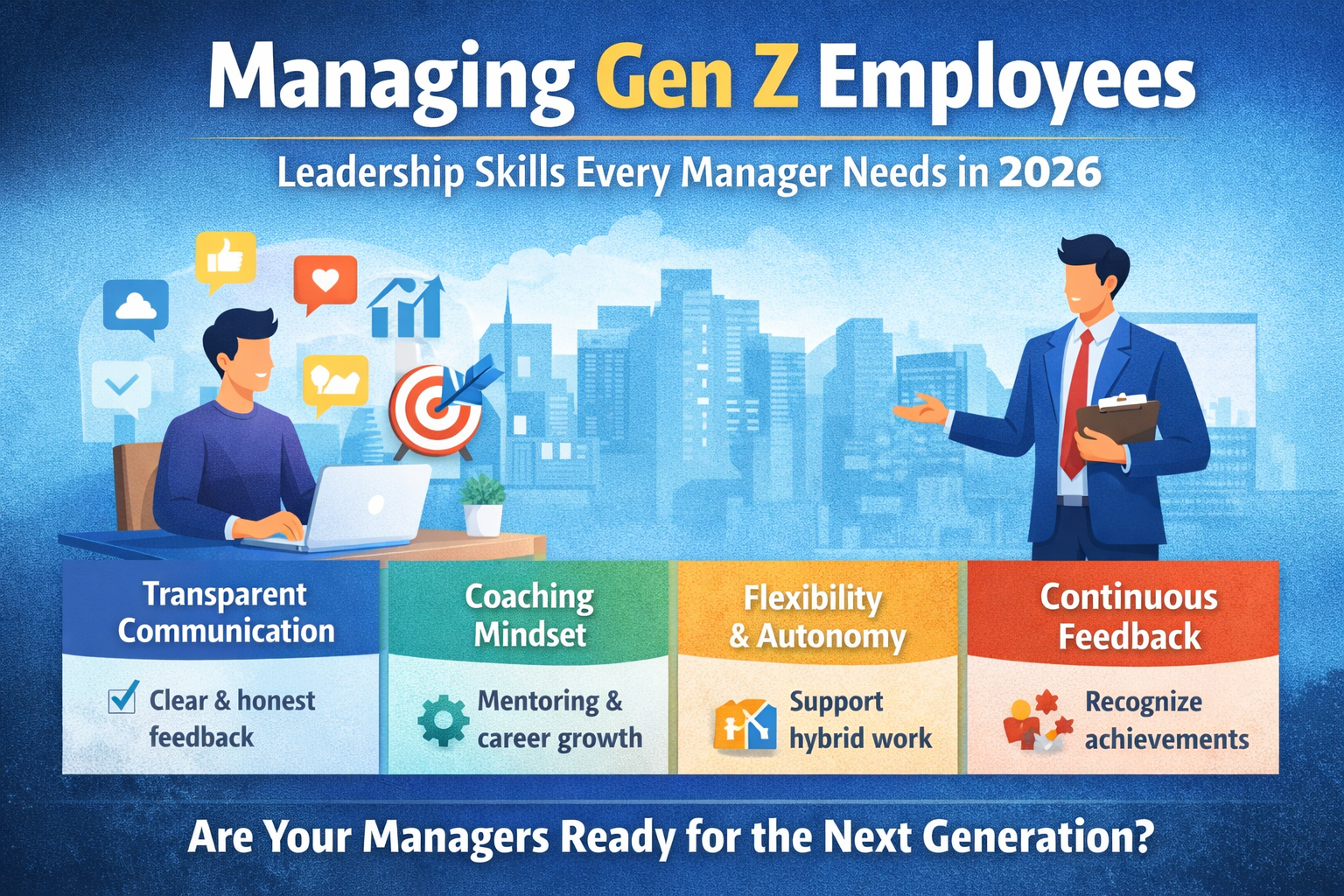
The modern workplace is going through one of the biggest generational transitions in history. As we approach 2026, Generation Z is rapidly becoming a dominant part of the global workforce. Organizations across industries are hiring Gen Z employees in large numbers, and this shift is transforming how companies think about leadership, communication, workplace culture, and employee development.
Born between the mid-1990s and early 2010s, Gen Z is the first generation to grow up fully immersed in digital technology. They entered the workforce during a time shaped by rapid digital transformation, global uncertainty, remote work, and evolving social values. As a result, their expectations from employers and managers are very different from previous generations.
For organizations, this change presents both opportunity and challenge. Companies that understand how to manage Gen Z employees effectively can unlock innovation, creativity, and long-term loyalty. Those that fail to adapt risk high turnover, disengagement, and talent shortages.
This comprehensive guide explores how Gen Z is reshaping the workplace, why traditional management approaches no longer work, and the leadership skills managers must develop to build high-performing, future-ready teams.
Understanding Gen Z in the Workplace
Gen Z employees are often described as digital natives, but their identity goes far beyond technology. Their upbringing in a rapidly changing world has shaped how they view work, leadership, and career growth.
They have witnessed economic uncertainty, global pandemics, and rapid technological disruption at an early age. These experiences have influenced how they define job security, success, and purpose.
- They seek meaningful and purpose-driven work
- They expect continuous learning and growth opportunities
- They value diversity, inclusion, and fairness
- They prefer open and transparent communication
- They prioritize flexibility and work-life balance
Unlike previous generations, Gen Z does not see work as separate from personal life. They want workplaces that support well-being, growth, and personal development alongside professional success.
The Generational Shift Reshaping Leadership
For decades, organizations relied on hierarchical leadership models. Managers were expected to give instructions, monitor performance, and enforce rules. This approach worked in predictable environments but struggles in today’s dynamic, people-centric workplaces.
Gen Z expects a different kind of leadership. They value influence over authority and collaboration over hierarchy. They want leaders who listen, support, and guide rather than control.
This shift requires managers to evolve from supervisors into mentors, coaches, and facilitators.
Why Traditional Management Styles Fail with Gen Z
Many organizations still rely on outdated management practices that unintentionally disengage younger employees.
- Top-down decision making limits participation
- Annual feedback cycles feel outdated
- Rigid workplace policies reduce flexibility
- Lack of purpose decreases motivation
Gen Z employees want to feel heard, valued, and involved in decisions that affect their work. When these expectations are not met, engagement drops quickly.
Key Leadership Skills Required to Manage Gen Z Employees
1. Transparent and Authentic Communication
Communication expectations have changed dramatically. Gen Z grew up with instant messaging, social media, and real-time information. They expect the same level of transparency in the workplace.
- Clearly communicate goals and expectations
- Explain the “why” behind decisions
- Encourage open discussions and idea sharing
- Create a culture of transparency
Managers who communicate openly build stronger trust and engagement.
2. Coaching and Mentoring Mindset
Gen Z sees managers as mentors who support career growth and development. They expect guidance, feedback, and learning opportunities.
- Provide career development conversations
- Offer regular learning opportunities
- Encourage skill development
- Support long-term growth planning
3. Emotional Intelligence and Empathy
Emotional intelligence is a core leadership skill in modern workplaces.
- Practice empathy and active listening
- Understand employee motivations
- Create psychological safety
- Handle difficult conversations constructively
4. Flexibility and Hybrid Work Leadership
Gen Z values flexibility and autonomy. Hybrid and remote work models are highly attractive to this generation.
- Focus on outcomes rather than hours
- Support hybrid and remote work models
- Encourage autonomy and ownership
5. Continuous Feedback and Recognition
Gen Z prefers frequent feedback rather than annual reviews.
- Provide real-time feedback
- Recognize achievements regularly
- Celebrate progress and milestones
How Gen Z Is Transforming Workplace Culture
Gen Z employees are not just adapting to workplaces — they are actively transforming them.
They advocate for inclusion, mental well-being, sustainability, and meaningful work. Organizations that embrace these values build stronger cultures and attract top talent.
The Business Impact of Managing Gen Z Effectively
- Higher employee engagement
- Reduced turnover and hiring costs
- Improved innovation and creativity
- Stronger employer brand
- Better collaboration and teamwork
Common Mistakes Managers Must Avoid
- Assuming younger employees lack commitment
- Providing limited feedback
- Ignoring career development needs
- Resisting flexible work models
- Using outdated communication styles
Preparing Leaders for the Future Workforce
Organizations must invest in leadership development programs that equip managers with modern leadership skills. Training in emotional intelligence, communication, coaching, and hybrid leadership is essential.
Conclusion
Gen Z is shaping the future of work. Organizations that adapt their leadership strategies will attract, engage, and retain the next generation of talent.
If your organization wants to prepare managers to lead the modern workforce, we can help.
Book a free consultation to explore our leadership and communication training programs.